Salt in the Air, Salt in the Sockets: What Living by the Sea Slowly Does to Torquay's Wiring
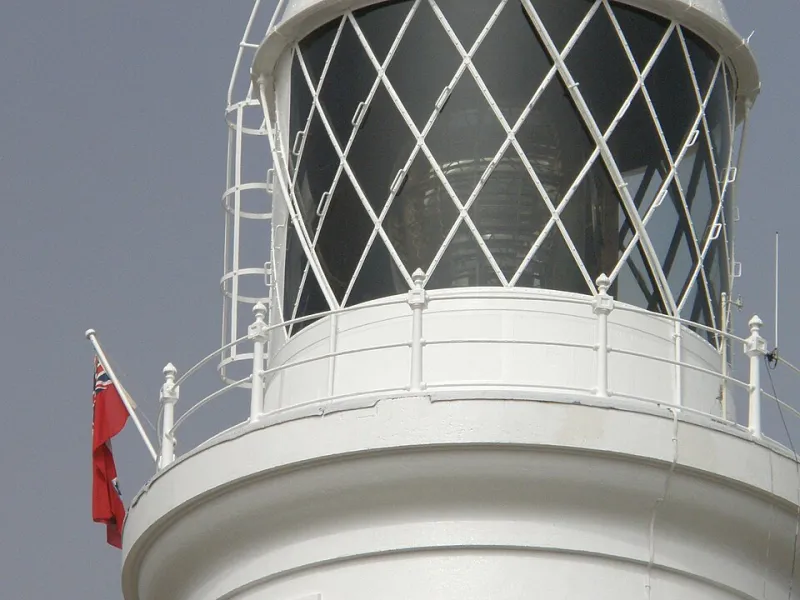
Photo: Amanda Slater from Coventry, West Midlands, UK, CC BY-SA 2.0, via Wikimedia Commons
Ask anyone who's owned a boat what the sea does to metal and you'll get a long answer. Ask a homeowner in Torquay and you'll usually get a shrug — because the sea air doesn't announce what it's doing. It works slowly, invisibly, in the back of an outdoor socket or the terminals of a consumer unit, and the first sign is often a trip that keeps happening or a smell you can't place.
That's the thing about living in the Bay. Prevailing winds come in off the south-west, pick up spray off the waves, and carry it inland. Homes high on the hills at Babbacombe and Wellswood get it. Flats along the seafront at Preston and Livemead get it. Even places a mile or two from the water get a diluted version, especially in winter when the wind is up and the salt is being thrown about.
What salt actually does to a terminal
Sea spray isn't just water. It's water carrying sodium chloride, and chloride ions are hygroscopic — they pull moisture out of the air and hold onto it. Put a film of salt on a brass terminal screw and even on a relatively dry day that surface stays damp. Damp plus two different metals plus a bit of current is a corrosion cell, and it starts working immediately.
The order of failure is fairly predictable. Zinc plating on steel screws goes first, showing up as a white powdery bloom, then red rust. Copper conductors go green with verdigris and eventually lose cross-section. Brass terminals corrode, go brittle and stop gripping, so a screw that was tight becomes loose. Spring contacts in older accessories lose their tension and start making intermittent contact — which is where the flickering starts.
There's a second, less obvious problem. Damp salt on the surface of insulation, mixed with a bit of household dust, gives current a path to creep across. That tracking can carbonise the surface and lead to arcing inside a socket or a light fitting. It's rare, but it's exactly the mechanism behind a lot of the small electrical fires that get blamed on faulty appliances.
Where the damage shows up first
Some parts of a coastal home take far more punishment than others, and it's usually the ones nobody looks at.
Outdoor sockets and garden lighting. Perished gaskets, cracked lids, water sitting in the enclosure. An IP66-rated accessory that's been in the sun and salt for eight years is often no longer IP66 in any meaningful sense.
Meter boxes and consumer units on external walls. Common in older Torquay properties, and a classic spot for damp. A board that's fine in a dry hallway is a different proposition in a cold garage or a cupboard under the stairs against an outside wall.
Earthing and bonding. Earth rods corrode in the ground, and bonding clamps on incoming water and gas pipes are frequently found in cellars, cupboards and voids where the damp sits. Losing a good earth connection isn't something you'll notice — until you need it.
Anything metal on the weather side of the house. Porch lights, doorbells, CCTV brackets, outside taps with a socket nearby. Salt spray lands on that wall more than any other, and the fixings rust from the inside out.
The warning signs worth knowing
Green crusting on terminals, white powder around fixings, rust streaks running down the wall below a socket, and lids that no longer sit flush are all early flags. So is an RCD that trips after wet or windy weather and then behaves itself for a fortnight — that pattern usually means water is getting in somewhere.
Less obvious: a socket face that feels warm when nothing's plugged in, a hum or buzz from an accessory, screws that crumble when they're turned, or a faint fishy smell near an outlet, which is the classic smell of overheating plasticiser.
A maintenance rhythm that actually works
You don't need to be constantly inspecting things. A simple seasonal habit covers most of it.
Spring — after the winter storms, walk the outside of the house. Outdoor sockets, lights, the shed supply, any pond or hot tub equipment. Check that lids close, gaskets are intact and nothing has water sitting in it.
Summer — the dry months are the right time for the bigger jobs: a condition report if it's due, replacement of tired outdoor accessories, any work in voids or roof spaces. It's also the easiest time to be without a circuit for half a day.
Autumn — a pre-winter check before the weather turns. Press the RCD test button, confirm the outdoor stuff still seals up, and get any niggling fault sorted while it's still a niggling fault.
Winter — watch and note. If something trips during a storm, write down when and what. That pattern is genuinely useful to an electrician and saves a lot of guesswork.
What actually helps, practically
Position matters more than product. A socket on the sea-facing wall will always take more spray than one tucked round the corner under an overhang, and moving it is sometimes the cheapest fix of all. Drip loops on outdoor cables stop water tracking into an enclosure. Gaskets are cheap and should be treated as a consumable rather than something that lasts forever.
When accessories do get replaced, marine-grade fixings and properly rated enclosures make a real difference — and a qualified electrician may apply a protective compound to terminals as part of the job. It's also worth asking about surge protection if your area sees regular lightning; under current UK wiring regulations it's increasingly recommended, and coastal installations are a sensible place to consider it.
What you shouldn't do is pressure-wash an outdoor socket, drill drainage holes in an enclosure, or wrap a damp accessory in tape and hope. All three make the eventual repair bigger.
The honest bottom line
The economics here are simple. A corroded socket, a replacement gasket or a re-terminated connection is a small, quick job. A rewiring after a fire is not, and neither is chasing a fault through a circuit that's been quietly degrading for a decade.
If you've been in your home a while — or you've just bought a place near the water and have no idea what the last owner did — a condition report is the sensible starting point. It tells you what you're dealing with, in order, and it's the difference between maintaining a home and discovering its problems one insurance claim at a time.