That Box in the Hallway: What a Consumer Unit Upgrade Really Involves in a Torquay Home
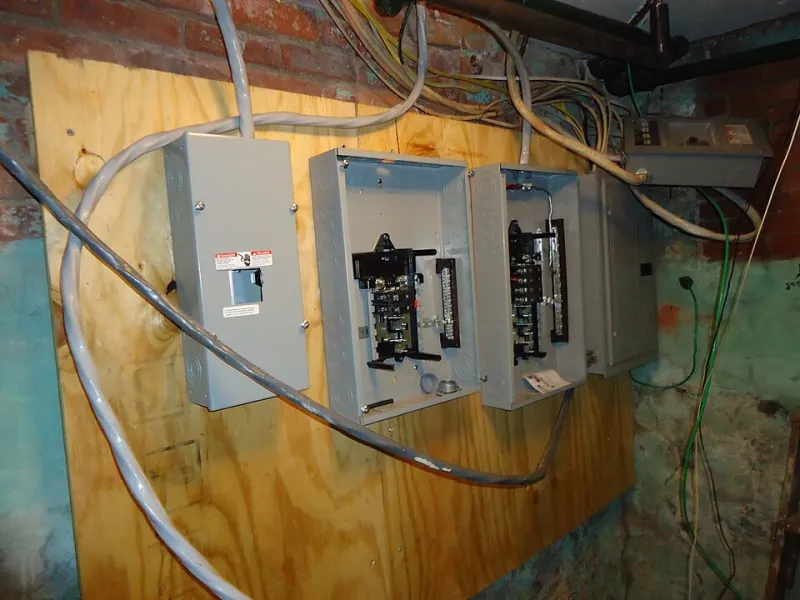
The box in the hallway is easy to ignore. It sits there, usually under the stairs or beside the front door, quietly doing its job until something trips and the freezer starts defrosting. But in plenty of Torquay homes, that box is older than the wallpaper, the carpet and possibly the last three occupants. It may still work, in the sense that the lights come on, but that does not mean it is giving you the protection a modern home expects.
A consumer unit upgrade is one of those jobs that sounds simple until you look inside. It is not just a case of unscrewing one box and screwing in a shinier one. The board is the control point for every circuit in the house, and replacing it properly means checking the wiring it serves, the earthing and bonding it relies on, and the way the whole installation behaves under test.
What the board is actually doing
The consumer unit, often still called the fuse box, takes the incoming supply and splits it into separate circuits: lights, sockets, cooker, shower, immersion heater, garden room, and so on. Each circuit should have its own protective device. In older boards, that might be a rewireable fuse carrier with a bit of fuse wire. In newer ones, it will be a miniature circuit breaker, often paired with a residual current device, or RCD, that cuts the power if it detects a fault to earth.
That RCD protection matters. It is the bit that can sit between you and a serious shock when a cable is damaged or a appliance develops a fault. A board with no RCD protection is not automatically unsafe in every single moment, but it is well behind what a modern installation should provide.
Signs it is worth a closer look
You do not need to become an electrician to spot a few clues. If your board has rewireable fuses, a wooden backboard, cracked plastic, missing labels, or a single main switch with no RCDs at all, it is worth asking for an assessment. Heat marks, a faint buzzing, a front cover that does not sit properly, or breakers that trip for no obvious reason are also good reasons to stop ignoring it.
Another clue is the age of the wiring around it. A newer board fitted to old rubber or fabric-covered cables can be a bit like putting a new lock on a fragile door. The board may be fine, but the circuits it controls need to be checked before anyone starts swapping parts.
Why an upgrade is more than a box swap
A proper consumer unit upgrade starts before the new board comes out of its packaging. The electrician should check the incoming supply, the main earthing conductor, and the main protective bonding to services such as gas and water. If the earthing and bonding are inadequate, fitting a new board without sorting them out is not much of an upgrade.
They should also test the existing circuits. Insulation resistance, polarity, ring continuity and RCD operation all matter. Sometimes the tests reveal a hidden fault in a circuit, which is far better found before the new board is energised than after. In older Torquay properties, it is not unusual to find a mix of old and newer wiring, a DIY spur from decades ago, or a shower circuit that has been altered more than once.
The new board itself should be suitable for the installation. In domestic premises, consumer units need to meet the relevant fire containment requirements, which is why you will see metal enclosures rather than the old plastic ones. A modern board will usually use RCBOs, which combine circuit breaker and RCD protection in one device, so a fault on one circuit is less likely to take out half the house. Surge protection is also worth discussing. It is not a magic shield against every power event, but it can help protect sensitive equipment from voltage spikes.
The day of the job
The electrician will isolate the supply safely, usually working with the main switch and testing to confirm the supply is dead before touching anything. The old board is removed, the enclosure is fixed in place, and the circuits are connected to the new protective devices. Cables are identified, labels are fitted, and the whole installation is tested.
It is not usually a whole-week job. A straightforward board change in a typical home can be done in a day, but older wiring, awkward access or faults can stretch it. Expect the power to be off for a chunk of the day, and plan around freezers, broadband and any medical equipment that depends on mains power.
Certificates you should be given
When the work is finished, you should not just get a verbal thumbs-up. A consumer unit replacement should come with an Electrical Installation Certificate, often called an EIC, along with a schedule of circuit details and test results. If the work is notifiable under Part P, the registered electrician should also arrange a Building Regulations Compliance Certificate through their competent person scheme.
Keep those documents. They are useful if you sell the house, remortgage, or need to show an insurer that the work was done properly. They also give the next electrician a clear starting point.
What about coastal Torquay homes?
Salt air and damp do not usually attack the inside of a consumer unit directly, but they do put pressure on the fabric of a building. Damp walls, condensation and poorly ventilated cupboards can all affect wiring accessories and enclosures over time. A board tucked into a cold hallway cupboard or a damp under-stairs space deserves a closer look, especially if there is any sign of moisture nearby.
A proper upgrade is a chance to tidy up the whole arrangement: correct labels, sensible circuit separation, good earthing, and protection that matches how the home is actually used. It is not about scaring anyone into a new board. It is about knowing what you have, what it can safely do, and what it cannot.
If your hallway fuse board is still a mystery, get it looked at by a registered electrician. A short assessment is far cheaper than guesswork, and it turns that ignored box into something you actually understand.