Beyond the Patio Doors: Outdoor Sockets, Garden Lights and the BBQ Corner Done Properly

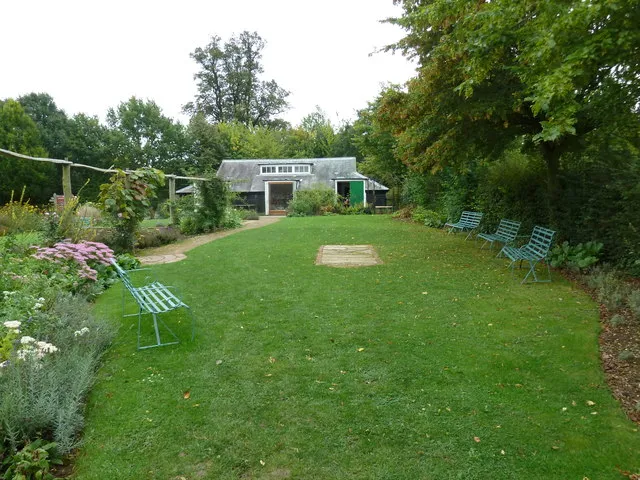
Photo: Jennifer Petrie , CC BY-SA 2.0, via Wikimedia Commons
There is a familiar Torquay scene every autumn: a sliding patio door open just enough for an orange extension lead, a draught coming through the gap, and a string of garden lights doing their best in the drizzle. It works, sort of. Until the lead gets stood on, the socket end sits in a puddle, or someone wants to plug in something heavier than a string of fairy lights.
Outdoor power is not difficult, but it is not a case of drilling a hole and screwing a waterproof socket to the wall either. Around here, rain, sea fret and salt air all have a say in how long the fittings last and how safe they stay. The good news is that a proper outdoor setup is usually a small, tidy project rather than a major upheaval — provided it is planned as a circuit, not as an accessory.
Start with what you actually want to run
Before anyone talks about IP ratings, work out the real list. A patio socket for the pressure washer? Some low-level lighting along a path? A socket near the barbecue for a rotisserie or a small fridge? Maybe a future hot tub or an electric car outside? The list shapes the cable size, the number of ways on the board and whether you want one outdoor circuit or two.
It is worth being honest about the barbecue corner. A socket that is fine for a phone charger and a set of lights is not automatically fine for a heater, a kettle and a pizza oven at the same time. Planners often forget the humble outdoor socket becomes the garden’s power hub the moment the weather improves. Ask for a bit of headroom now rather than discovering the limit when everything is plugged in.
IP ratings are a starting point, not a promise
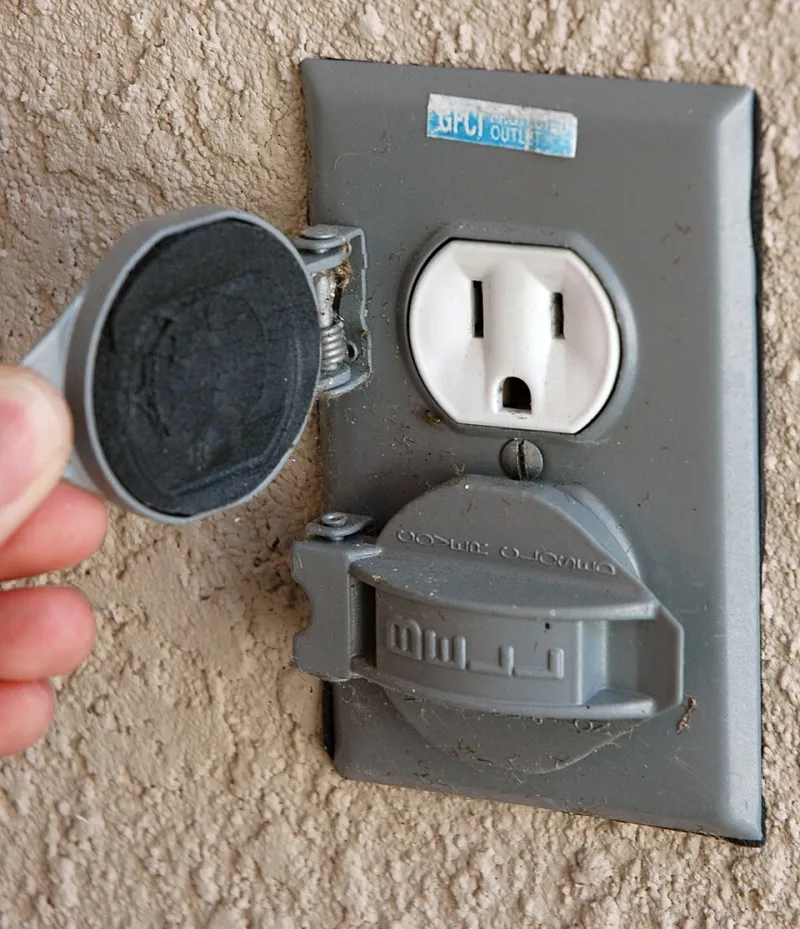
Outdoor sockets and lights carry an IP rating. The first digit covers solids, the second covers water. An IP44 fitting is splash-resistant; IP65 is dust-tight and protected against water jets; IP66 is a step further again. For a typical exposed patio socket in Torquay, something in the IP65 or IP66 bracket is a sensible starting point, with a self-closing lid that actually closes.
What the rating does not tell you is how the thing behaves after two winters of salt-laden damp. A fitting can be water-resistant and still corrode at the screws, seize at the hinge or fill with green residue behind the seal. Mounting position matters too. A socket tucked under an eaves overhang will usually fare better than one facing the full force of a south-westerly, but it still needs a drip loop in the cable and a lid that drains rather than traps water.
RCDs, RCBOs and the reset button that matters
Outdoor sockets need reliable earth leakage protection. In most homes that means a 30mA RCD or, better still, an RCBO protecting the outdoor circuit. An RCBO combines overcurrent and earth leakage protection in one device, so a fault outdoors is less likely to knock out half the house.
A socket with a built-in RCD can be useful, but it is not a substitute for proper protection at the consumer unit. It is also worth testing the trip button now and then, not just assuming it will work when someone is standing on wet paving. If the existing board is old, full, or has no spare way, that may shape the job more than the socket itself. This is one of those moments where a quick look at the consumer unit saves a lot of guessing.
Cable routes: the bit nobody photographs
Outdoor cable needs to be suitable for the job. For buried runs, steel wire armoured cable is common because it gives mechanical protection as well as a robust outer sheath. For surface runs, UV-stable flexible cable in conduit can work well, but it still needs proper glands, clips and protection where it enters a fitting. Ordinary indoor flex tied to a fence is not an outdoor installation; it is a temporary fix waiting to become a fault.
Routes deserve a bit of thought. Keep cables away from irrigation pipes, drainage runs, decking fixings and the places where a spade is likely to go. Buried cable is often laid around 450mm deep with warning tape above it, though the exact method depends on the situation. Photograph the route before it disappears under paving or gravel. Future-you will be grateful.
Cable size is not a guess either. Voltage drop over a long garden run can matter, especially if lights are at the far end. A 2.5mm² cable might be fine for one short spur; a longer run or a heavier load may want 4mm² or more. This is the sort of thing that gets checked before the trench is filled, not after.
Garden lighting: low voltage or mains?
Garden lighting comes in two broad flavours. Low-voltage systems use a transformer, often placed indoors or in a protected outdoor enclosure, and run safer voltages around the garden. Mains-voltage fittings are also common and can be very good, but they need proper IP-rated housings, glands and connectors.
The weak point is usually the connection, not the lamp. Cheap push-fit connectors buried under a shrub will eventually fill with moisture. A proper outdoor joint, a drain hole where water can escape, and a fitting that is accessible for maintenance will last far longer. Warm-white lighting along a path or a few uplights in a border can look excellent; a festival of blue LEDs aimed at the neighbour’s fence is another matter. Timers and photocells are handy, but they need to be indoor-rated or suitably enclosed if they live outside.
The barbecue corner needs a bit of distance
A socket near the barbecue is genuinely useful, but it should not be part of the grill. Keep it away from direct heat, fat splatter and the place where smoke collects. Heat can damage cable insulation and plastic fittings even if there is no flame nearby. A stainless or plastic enclosure mounted on a stable wall is usually better than something screwed to a fence panel that moves in the wind.
If the barbecue area is likely to grow into a pizza oven, patio heater or outdoor kitchen, say so early. A small isolator nearby can make maintenance easier, and a dedicated circuit may be more sensible than adding everything to one outdoor spur. It is also worth thinking about how the cable gets there without becoming a trip hazard across the patio.
Salt air is the quiet tax on coastal fittings
Sea air is lovely until it gets into your electrics. Salt accelerates corrosion on screws, terminals and metal enclosures, and it loves a tiny gap in a seal. Marine-grade stainless steel, good-quality plastics and brass or tinned connections tend to cope better than cheap mild-steel fixings. Mixing dissimilar metals can speed up corrosion, so matching the fixings to the fitting is worth the small extra cost.
A yearly visual check is not a bad habit. Look for cracked lids, green residue, loose screws, water inside a fitting or cable that has gone stiff and chalky in the sun. Do not blast outdoor fittings with a pressure washer; a gentle wipe and a check of the seal is usually enough. If a lid no longer closes properly, replace it rather than propping it shut with a plant pot.
Testing and paperwork still matter outside
Even a modest outdoor socket or lighting job should be tested properly: polarity, insulation resistance, earth loop impedance and RCD operation, at the very least. In England, some domestic electrical work is notifiable under Part P, and a new outdoor circuit usually falls into that category. A registered electrician will know what applies and will leave a certificate or test schedule rather than a shrug and a cup of tea.
Outdoor power should feel boring in the best way. Lights come on, the pressure washer runs, the barbecue corner has a socket where it needs one, and nobody is wedging a patio door open with a paperback. In a coastal town like Torquay, that quiet reliability is worth planning for.