When the Reset Button Won’t Stay Up: Damp, RCDs and Coastal Torquay Homes
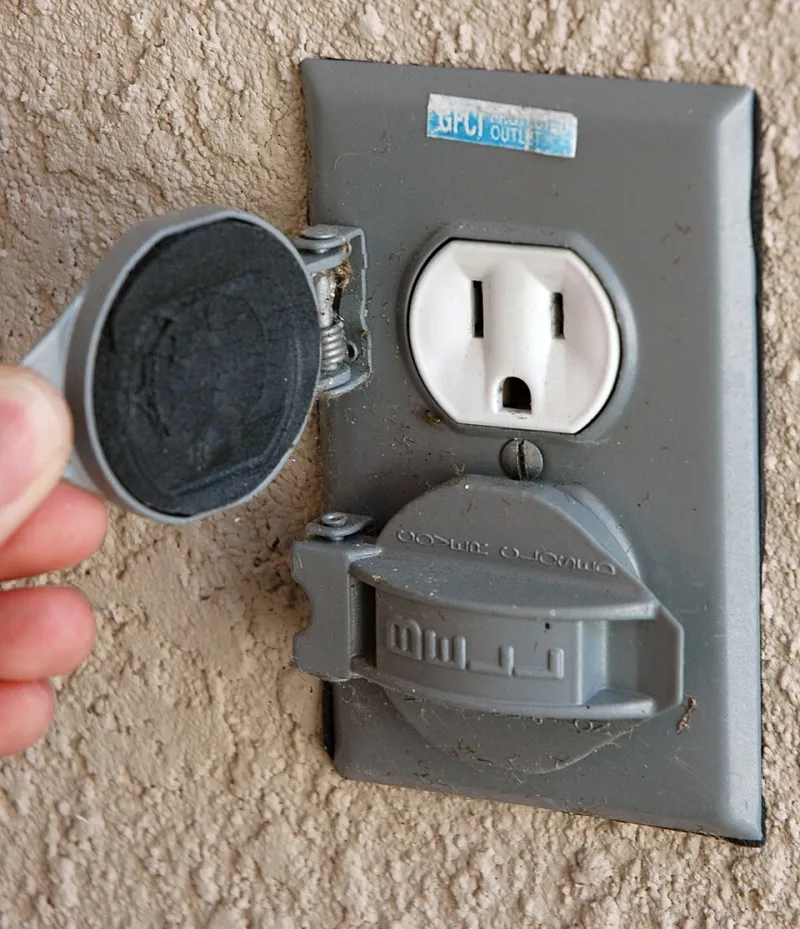
Photo: Unknown, CC BY 2.5, via Wikimedia Commons
The morning after the downpour
It is a familiar Torquay scene. The rain has come in sideways overnight, the gutters are overflowing, and the RCD in the hallway has popped. You push the reset button, it stays up for twenty minutes, then it drops again. By the third attempt you are starting to blame the kettle, the washing machine or possibly a neighbour’s hedge.
In a lot of homes around the English Riviera, the real culprit is damp in an outdoor part of the installation. Not a dramatic flood, usually. More often it is a worn gasket on an outside socket in Babbacombe, a garden light joint that has been sitting in wet soil since the summer, or a garage supply in Shiphay that has quietly been taking on water through an old cable gland.
The RCD is not being difficult. It is doing exactly what it was installed to do.
What the RCD is actually sensing
An RCD, or residual current device, watches the current going out on the live conductor and coming back on the neutral. If those two figures stop matching, it assumes some current is leaking to earth and it trips. Most domestic RCDs are set to 30 mA, which is a very small amount of leakage, and they are designed to operate quickly.
The device does not know that it is raining. It only knows that current is finding a path it should not be taking. Damp lowers the insulation resistance of cables, connectors and accessories. A socket that was perfectly happy in dry weather can start leaking a tiny amount of current once water has tracked into the wrong place. Multiply that by a garden circuit with several joints, or a garage submain with an old metal enclosure, and the RCD has enough reason to trip.
That is why the fault often appears after heavy rain, especially wind-driven rain from the sea. It is also why the trip can be intermittent. A dry week may bring no problems at all, which is exactly what makes these faults so annoying to pin down.
Where moisture gets in on the coast
Coastal homes have a particular relationship with water. Salt in the air, porous render, older stone walls, exposed elevations and gutters that struggle in a storm all add up. The electrical weak points tend to be predictable:
- Outdoor sockets with cracked covers, missing gaskets or cable entries that were never sealed properly.
- Garden lighting joints buried in flower beds, tucked under decking or wrapped in tape that has since given up.
- Pond pumps and water features, which combine electricity and water in the least forgiving way possible.
- Garage supplies fed by a cable clipped to a wall, with a gland that has seen better days.
- Conservatory sockets in Livermead or Chelston, where a lean-to has its own little microclimate.
- Sheds and outbuildings running off a circuit that was installed years ago and has never been inspected since.
A recent example locally involved a garden socket in Wellswood that looked fine from the outside. The cover closed, the switch worked, and the mower ran happily in July. After a November storm the RCD tripped every time the wind blew rain onto that wall. The cover was intact but the cable entry at the back had never been properly sealed. Water had been running down the cable and into the back of the accessory. No amount of resetting was going to fix that.
Another common pattern is a garage supply in Shiphay or Maidencombe where the garage consumer unit is damp. The garage itself may look dry, but a tiny gap around a cable gland or a failed enclosure seal lets in enough moisture to upset the RCD on the house side.
Not every trip is damp
It is worth saying clearly that rain is not always to blame. RCDs also trip because of faulty appliances, damaged cables, boiler components, washing machine heaters, kettles, immersed elements and good old-fashioned DIY disasters involving nails and cable routes. A trip that happens when you switch on a particular appliance is a different clue from a trip that happens overnight during a storm.
But if the pattern repeats after wet weather, and especially if it stops when you unplug the outdoor equipment, damp is a strong suspect.
Safe checks before you call an electrician
You do not need to start dismantling sockets. There are, however, a few sensible things a homeowner can do without putting themselves at risk.
First, note when the RCD trips. Is it during rain, after rain, when a particular appliance starts, or at random? A simple note on your phone is more useful to an electrician than a vague memory of it happening a few times.
Second, unplug outdoor equipment that can be unplugged safely. Pond pumps, garden lights with plug-in transformers, mower chargers and similar items should come out of the socket. If an outdoor circuit has a clearly marked isolator that you can switch off without opening anything, use it. Do not open accessories, consumer units or garage enclosures to investigate.
Third, look from a safe distance. Are covers missing? Is a socket sitting in a puddle? Is water running down a cable into a garage? Do not touch wet electrical equipment, and do not spray anything into a socket. WD-40 is not an electrical repair, whatever the internet says.
Fourth, if the RCD will not reset even with the outdoor equipment unplugged, stop pressing it. Repeatedly resetting a device that is trying to tell you something is not troubleshooting. If you smell burning, see scorch marks, or have any heat or smoke around an accessory, switch off at the main switch if it is safe to do so and call an electrician.
What a proper investigation looks like
An electrician will not simply dry the socket with a cloth and declare it fixed. The useful work is in testing. Insulation resistance testing can show which circuit is leaking to earth. Ramp testing can show how close the RCD is to its trip threshold. Splitting the installation into sections helps identify whether the fault is in the house, the garage, the garden or a single outdoor accessory.
Once the faulty section is found, the repair might be straightforward: a new weatherproof socket, a proper cable gland, a replacement enclosure, re-terminated connections or a better-positioned light fitting. Sometimes the sensible answer is to separate outdoor circuits onto their own RCBO so one damp garden light does not take out half the house. In older Torquay homes, it may also prompt a wider conversation about the consumer unit, earthing and the age of the outdoor wiring.
The red lines
There are some jobs that should always be left to a competent electrician. Do not open the consumer unit. Do not remove or bypass an RCD because it keeps tripping. Do not replace it with a higher-rated device to stop the nuisance. Do not disconnect earth wires. Do not seal around live terminals with silicone. Do not dig into a garden cable route without knowing what is buried there. And do not use an outdoor socket with a cracked cover just because it still works when it is dry.
A tripping RCD after rain is a warning, not an inconvenience to be silenced. Around the coast, damp will keep finding the weakest point in an outdoor installation. The good news is that these faults are usually findable, repairable and worth sorting before the next storm arrives.