Garden Rooms Need Real Circuits, Not Just an Extension Lead
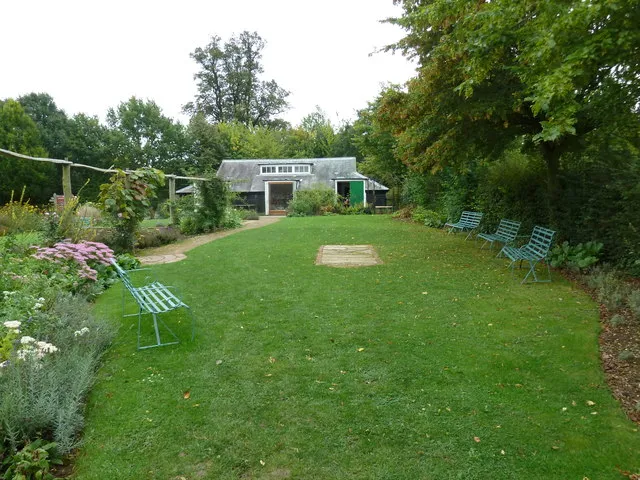
Photo: Basher Eyre , CC BY-SA 2.0, via Wikimedia Commons
Garden rooms have moved from lockdown novelty to permanent fixture. In Torquay, where a lot of gardens are sloped, sheltered or tucked behind the house, a shed office or summerhouse can feel like a proper extra room. The structure goes up, the insulation goes in, the desk arrives, and then someone asks the question that should have been asked earlier: where is the power coming from?
The honest answer is that a garden room needs a proper supply, not an extension lead trailed across the lawn. That is not because garden rooms are complicated for the sake of it. It is because power leaving the house has to survive weather, distance and the kind of use a home office actually gets.
An extension lead is not a garden supply
An extension lead is designed for temporary use. It is not designed to be UV-stable, buried, walked on, rained on or left plugged in through a Torquay winter. A lead run across a patio will be damaged by feet, furniture and garden tools. One run through a hedge can be cut or crushed. A lead that passes through a doorway can be pinched until the inner conductors are stressed.
There is also the distance problem. The further you go from the socket, the more voltage drops, and the more likely it is that a heater, kettle or power tool will struggle. More importantly, a trailing lead rarely has the right protection for a garden building. If water gets in, or a cable is damaged, the fault needs to trip something quickly. A dedicated circuit with the correct protective devices is designed to do exactly that.
What a proper garden supply looks like
A proper supply usually starts at the consumer unit in the house. A dedicated circuit is run out to the garden building, often using steel wire armoured cable, sometimes called SWA. That cable is tough enough for outdoor routes, but it still needs to be installed correctly: buried at a sensible depth or run in ducting, protected where it emerges, and terminated with the right glands so water cannot track into the enclosure.
At the garden room end, there is usually a small consumer unit or a set of properly enclosed protective devices. Sockets and lights should be on separate circuits where the demand justifies it, and the whole supply should have RCD protection. For a garden office with a heater, a laptop, a monitor and a kettle, it is worth thinking about the load before the cable is sized. A quick add-up of what you expect to run is more useful than guessing.
An isolator at the house end or in the garden room is also handy. It gives you a clear way to shut the supply down for maintenance without fumbling in the dark. None of this is exotic; it is standard good practice for outbuildings.
Consumer unit capacity and Part P notification
Before anyone starts digging, check whether the house consumer unit has a spare way and whether it can take the additional load. Older units sometimes have no spare capacity, or they may be due an upgrade anyway. A garden room is a good moment to look at the whole arrangement rather than squeezing one more circuit into a board that is already full.
In England and Wales, most garden room supplies count as notifiable work under Part P of the Building Regulations. That does not mean the job is automatically difficult. It means the work should be carried out and certified by a registered electrician who can self-certify, or notified through building control. Either way, you should end up with an Electrical Installation Certificate and the test results that go with it. If someone offers to wire a garden office with no paperwork, that is a warning sign rather than a shortcut.
The work should also be designed and tested to BS 7671, the wiring regulations. That covers cable sizing, earthing, protective devices and the special considerations for outdoor installations. It is not the sort of thing to size by eye over a cup of tea.
Coastal details that catch people out
Torquay's climate is mild compared with much of the UK, but the coast adds its own pressures. Salt in the air can corrode metal enclosures and fixings over time. Damp and condensation are constant themes, especially in garden rooms that are heated intermittently. A room that is warm on Saturday and cold by Monday can produce condensation inside equipment if ventilation and heating are not thought through.
Outdoor sockets and switches should be suitable for the location, with the right IP rating and glands that actually seal. Cable routes should avoid low spots where water collects. If the garden slopes, drainage matters as much as the electrical design. UV will degrade cheap plastic conduit and cable ties, so outdoor-rated materials are worth the small extra cost.
Garden rooms also attract rodents and garden tools. A cable clipped neatly at a sensible height is less vulnerable than one lying loose under a hedge. If the cable is buried, a duct with a draw cord makes future changes much easier. And if the garden room has a metal frame or a particular type of construction, earthing needs to be considered properly rather than assumed.
Planning the job properly
A good garden supply starts with a walk around the garden. Where is the consumer unit? What route can the cable take? Is there a trench to dig, a duct to lay, or a wall to go through? Where will the garden room's own isolation and protection sit? What is the expected load, and does the existing house supply have room for it?
Only then should cable size and protective devices be chosen. After installation comes testing: insulation resistance, earth loop impedance, RCD operation and the rest. The certificate is not a bit of paper for the drawer; it is the record that the supply has been designed and checked rather than guessed at.
A garden room is a worthwhile investment in a Torquay home, and a proper electrical supply is part of making it usable all year. It is also one of those jobs where doing it once, correctly, is far cheaper than fixing a trail of extension leads and damp joints later on.