The Floor Is the Question: Electric Underfloor Heating in Torquay Retrofits
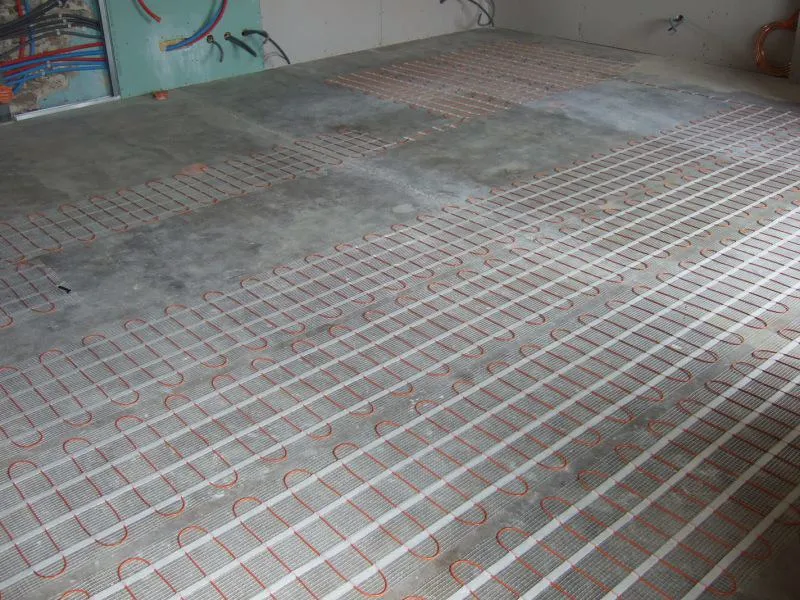
Photo: Ian Haycox, CC BY-SA 4.0, via Wikimedia Commons
There is a particular kind of Torquay morning when the bathroom floor feels colder than the sea in January. It is the moment many homeowners start searching for electric underfloor heating. The idea is simple: a thin mat under the tiles, a thermostat on the wall, warm feet by the weekend. In practice, electric underfloor heating is a small electrical installation with real circuit, heat-loss and moisture considerations. It can be brilliant in the right room. It can also be an expensive way to warm a poorly insulated floor.
Start with the room, not the mat
Electric underfloor heating works best as a supplementary heat source in a small, well-insulated space: a bathroom, an ensuite, a kitchen floor where the tiles are already coming up, or a garden room with a decent insulated slab. It is less convincing as the sole heating for a whole house, especially in older Torquay properties with suspended timber floors, draughty sash windows and little underfloor insulation.
Before anyone quotes for a mat, ask what is under the floor. A solid floor will respond differently from a timber floor. A bathroom over a cold void may need insulation below the heating element, not just a mat on top. A garden room that is really a glazed box may lose heat faster than the mat can replace it. The honest starting point is heat loss, not product choice.
The circuit is not an afterthought
Electric underfloor heating mats typically draw around 150 to 200 watts per square metre. A six-square-metre bathroom can therefore need roughly 900 to 1,200 watts. That is not a huge load, but it is not a socket-spur load either. A proper installation usually wants a dedicated circuit from the consumer unit, with the correct cable size, a local isolator or fused connection unit, and 30 mA RCD protection in line with BS 7671.
In older Torquay homes, the consumer unit may already be full, or the earthing and bonding arrangements may need attention before another circuit is added. Part P notification and building-control requirements apply to this kind of work in a dwelling, so ask who is handling that side of things. A quote that only mentions the mat and thermostat is not telling you the whole story.
Wet rooms, RCDs and bathroom zones
Bathrooms are not just small kitchens with more steam. They have defined zones around baths, showers and basins, and equipment has to suit the location. The thermostat is usually kept outside the wet zones, while the heating mat itself sits under the finished floor. IP ratings, cable routing and the position of any flex outlet all matter.
RCD protection is essential. So is testing. A heating mat should be tested before tiling, after tiling, and again at commissioning. Those readings are your evidence that the element was not damaged by a trowel or a stray screw. If your electrician does not mention testing at those stages, ask why.
Thermostat and sensor placement
The floor sensor is the small, unglamorous part that decides whether the system behaves sensibly. It needs to sit between heating cable runs, not on top of one, and not in a cold corner where it will keep calling for heat. The thermostat should be somewhere representative, away from direct sun, radiators, towel rails and draughts.
A programmable thermostat with a floor sensor limit is usually worth having. It lets you set a comfortable floor temperature rather than guessing at air temperature. If the sensor fails later, access can be awkward, so some installers run the sensor in a conduit to make replacement possible. Ask about that before the tiles go down.
Tile build-up and the details that bite
Electric underfloor heating adds height. Mat, adhesive, self-levelling compound and tile can easily add 10 to 15 mm, sometimes more. That can affect door thresholds, skirting boards, toilet waste connections and shower tray heights. In a small bathroom, those millimetres matter.
Not every tile or stone is suitable, and some need a decoupling membrane. Flexible adhesive and correct priming are part of the job, not optional extras. If the electrician installs the mat and a tiler follows later, the responsibility for protecting and testing the mat needs to be clear. Someone should own the whole sequence.
Coastal damp: helpful, but not a cure
Torquay’s sea air and older housing stock can leave bathrooms and garden rooms feeling clammy. A warm floor can help a room dry out and feel less grim underfoot, but it is not a damp cure. If there is rising damp, a leaking shower, blocked airbricks or poor extract ventilation, underfloor heating may simply warm the problem.
Ventilation still matters. A bathroom extractor fan that actually shifts air is more important than a toasty floor. In a garden room, insulation and a proper damp course matter more than a bigger mat. Do not install heating over a damp subfloor and hope for the best.
Realistic running costs
Running costs depend on the mat size, insulation, thermostat settings and your electricity tariff. As a rough example, a 1.2 kW mat in a well-insulated bathroom might run for two hours in the morning and two in the evening. Because the thermostat cycles on and off, it may not draw full power for all of that time. At around 25p per kWh, a few hours of effective heating could cost roughly 70p to £1 a day. In a poorly insulated room, left on for hours, it can be considerably more.
That is why electric underfloor heating is usually a comfort upgrade, not a whole-house heating strategy. Compare it with a heated towel rail, a well-sized panel heater or simply fixing the ventilation and insulation. Sometimes the cheaper answer is less exciting but more sensible.
When it is a good fit
It makes sense when the floor is already being replaced, the room is small and insulated, the consumer unit has capacity, and you accept it as supplementary warmth. It is also a neat solution in a refurbished bathroom where radiators are awkward and pipework is not wanted.
It is a poor fit when someone promises it will heat an entire draughty house, when the existing wiring is already stretched, when floor height is tight, or when the subfloor is damp and uninsulated. A good installer should be willing to say no to those jobs.
Questions to ask before accepting a quote
Ask whether the heating will have a dedicated circuit and 30 mA RCD protection. Ask who is handling Part P notification and testing. Ask for the heat output per square metre, the thermostat and sensor model, and the warranty terms. Ask how the floor is being insulated and what the total build-up will be. Ask for test readings before and after tiling. Ask what happens if the floor sensor fails. And ask for a running-cost estimate based on the actual kW and your tariff, not a vague promise about cosy toes.
Warm feet are lovely. A safe, well-planned circuit and a floor that suits the room are better. Get those right and electric underfloor heating can be a genuinely nice addition to a Torquay home. Get them wrong and it is just an expensive way to take the chill off a problem you have not solved.