Salt, Signal and the Front Door: Smart Cameras That Cope With Coastal Torquay

A doorbell going off at 2am is rarely a sign of anything dramatic. More often it is a cat, a fox, a gust of wind moving a bush, or a camera that has decided the pavement is suspicious. Smart doorbells and outdoor cameras can be genuinely useful for Torquay homeowners, especially if you want to keep an eye on a front door, a side gate or a parked car. But coastal homes ask a bit more of them than the glossy box suggests.
Salt in the air, driving rain, old bell wire and thick stone walls all have a say in whether the thing works reliably six months after it goes up. This is not a scare story about connected homes. It is a practical look at what tends to go wrong, and where a sensible DIY approach stops being sensible.
Start with the job, not the gadget
Before comparing brands, decide what you actually want the camera to do. Is it there to catch couriers, check who is at the door when you are upstairs, watch a gate at the side of the house, or give you a view of the driveway? A battery-powered doorbell may be fine for occasional live checks. A wired unit usually makes more sense if you want constant recording, frequent live viewing or fewer trips up a ladder.
Battery units are easier to place, but they still need charging. In a Torquay winter, cold weather can shorten battery life, and a camera mounted high above a harbourside terrace is not much fun to fetch down every few weeks. Wired units avoid that, but they need a reliable power source. Running a USB cable through a window frame or letterbox is not a proper solution. It lets water in, strains the cable and looks exactly like what it is.
The transformer and chime question
Many older UK doorbells run from a small transformer, often tucked in a hallway cupboard, loft or consumer unit area. Video doorbells usually want a different voltage from the old chime, and the required range varies by model. An old transformer that has quietly powered a basic bell for years may not be suitable. It is not simply a case of swapping one box for another without checking the specification.
Chimes matter too. Some smart doorbells work with existing mechanical chimes, some need a digital chime, and some use a plug-in chime module instead. If the existing chime is old, buzzy or has been wired in an inventive way by a previous owner, it is worth getting it checked rather than forcing a new doorbell to work with it.
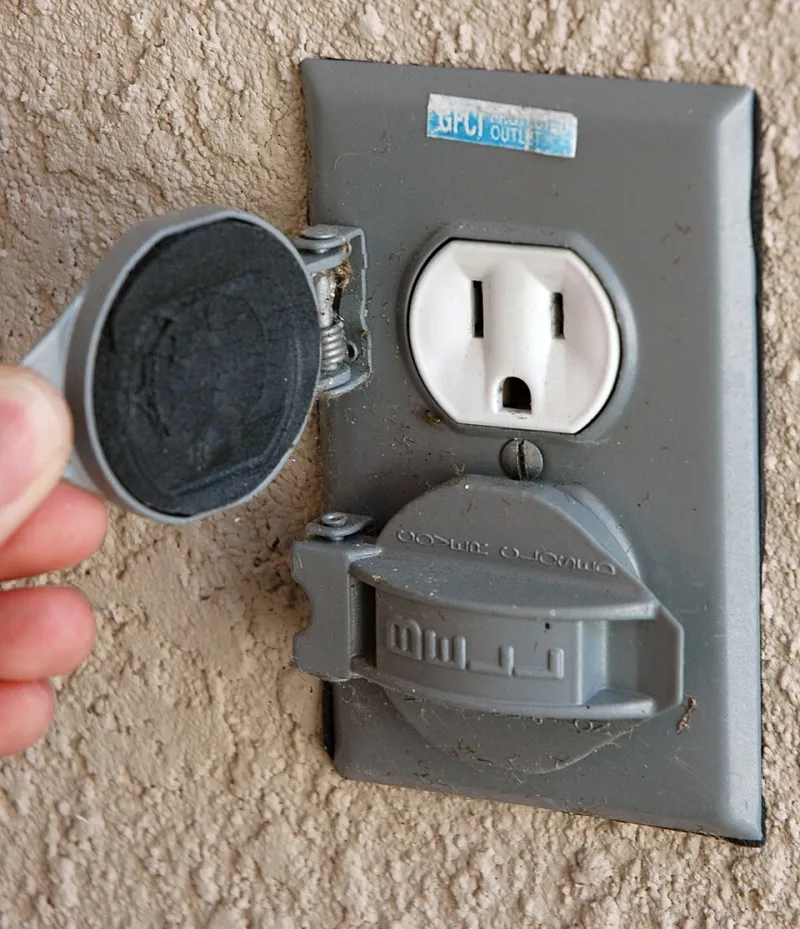
Bell wire is not mains cable. If there is no existing doorbell wiring and the plan involves a new power supply, an outdoor socket or a cable run through a wall, that is beyond a simple swap. It may need RCD protection, suitable cable and a weatherproof enclosure. In some cases it is notifiable work under Part P. A registered electrician can advise on the specifics rather than guessing from a product listing.
Salt air is the quiet enemy
A camera that survives a summer in Torquay may look very different after a winter of salt-laden air. Corrosion creeps into screw terminals, charging ports and cheap fixings. A high IP rating helps, but it is not the whole story. An IP65 unit is better suited to exposed positions than an indoor camera in a plastic case, but the mounting screws, cable entry and charging flap still need thought.
Where possible, mount the unit under a porch, eaves or overhang. That reduces direct rain and spray without sealing the device into a box that traps moisture. If the camera has a rubber gasket, make sure it sits properly. If there is a cable entry, form a gentle drip loop so water runs off rather than into the housing. Do not silicone over drainage holes or moving parts.
A wipe with a damp cloth now and then is usually enough. A jet washer is not. Nor is a squirt of generic lubricant into ports. Check the fixings annually, especially on older brick or render, and replace rusty screws before they become a bigger job.
Wi-Fi blind spots are normal in old Torquay homes
Front doors are often the worst place for Wi-Fi. Thick walls, foil-backed insulation, rendered exteriors and metal doors all reduce signal. A camera that works on the kitchen table may struggle once it is outside. Test the signal on your phone at the intended height and position before drilling anything. It is also worth checking upload speed, because live view and cloud recording need a steady connection, not just a strong icon.
The 2.4GHz band usually travels further than 5GHz, which is why many cameras prefer it. A mesh node near the hallway can help, but placing it right beside the front door is not always the answer. Adjust motion zones so the camera is not watching the pavement, and turn down sensitivity if every passing seagull sets it off. Night-time alerts are often caused by insects near the lens, headlights reflecting off a wall, or a bush moving in the wind.
When to call it a proper electrical job
Call an electrician if the doorbell needs a new transformer, a mains feed, an outdoor socket or a cable route through a cavity wall. Also call one if the existing wiring looks aged, if there is no RCD protection, if the consumer unit is old, or if you are renting and need landlord permission. A smart doorbell is a small device, but the supply behind it still deserves respect.
A sensible pre-purchase check is simple: confirm the power requirement, check the chime compatibility, decide where the cable will go, test the Wi-Fi, and look at how exposed the mounting spot will be. If any of those answers feel vague, get advice before the drill comes out. A reliable doorbell is less about the gadget and more about the install behind it.